
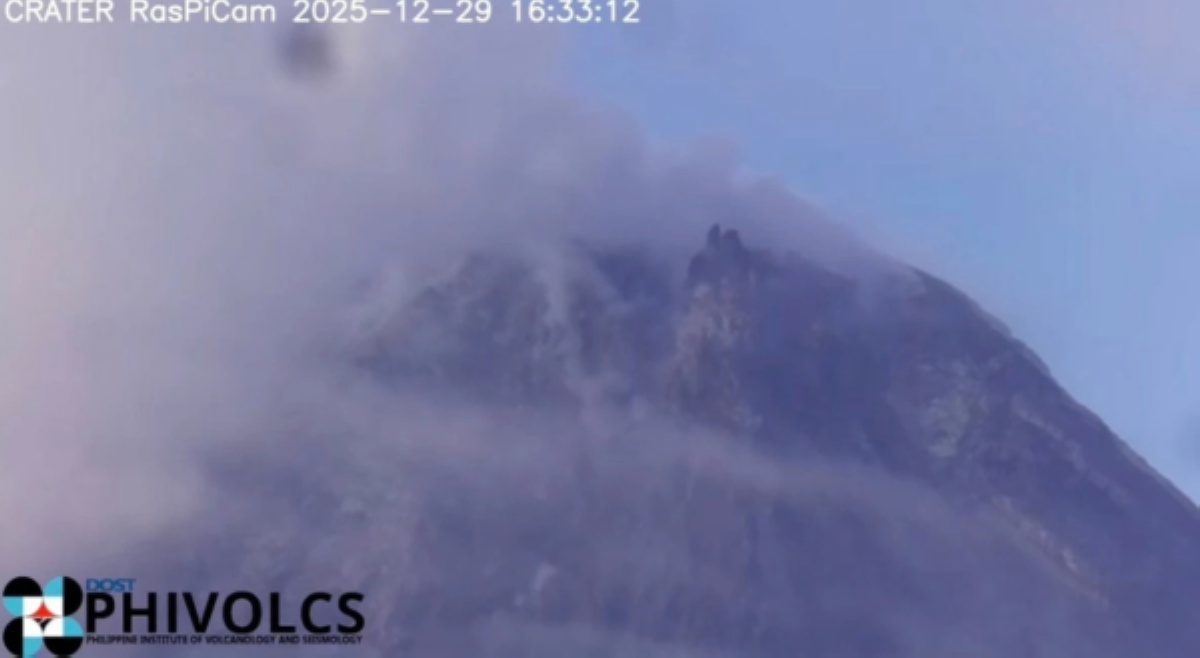
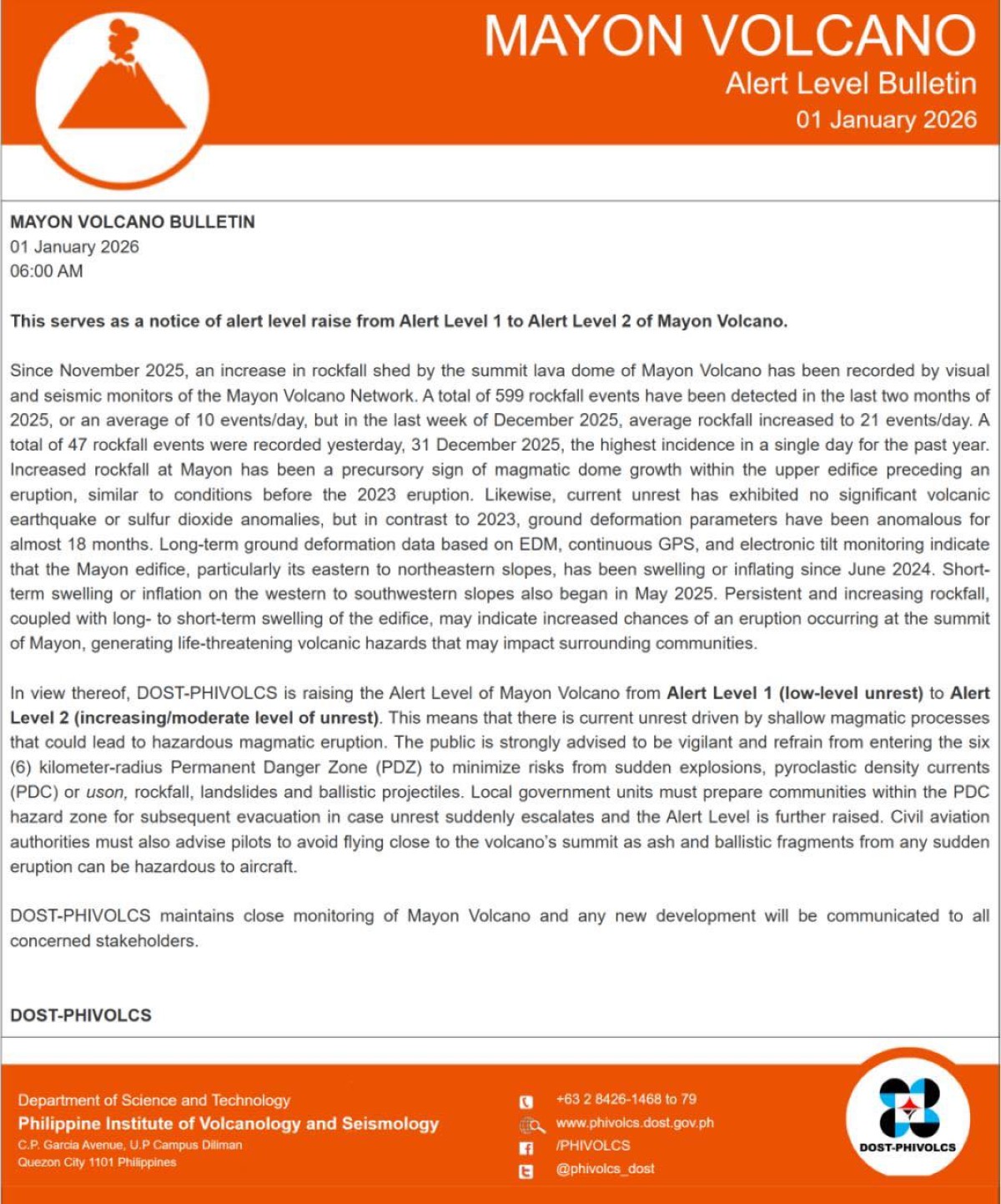
Itinaas ng Philippine Institute of Volcanology and Seismology (Phivolcs) sa Alert Level 2 ang Bulkang Mayon ngayong 6:00 AM ng Huwebes, Enero 1.
Base sa bulletin na inilabas ng Phivolcs, itinaas ang alert level dahil sa kasalukuyang pag-aalboroto bunsod ng “shallow magmatic processes” na maaaring magdulot ng mapanganib na pagsabog ng magma.
Ayon pa sa ahensya, sa huling dalawang buwan ng 2025, nakapagtala ng kabuuang 599 o 10 pagguho ng mga bato sa bulkan ang visual at seismic monitors ng Mayon Volcano Network.
“Since November 2025, an increase in rockfall shed by the summit lava dome of Mayon Volcano has been recorded by visual and seismic monitors of the Mayon Volcano Network. A total of 599 rockfall events have been detected in the last two months of 2025, or an average of 10 events/day,” ani Phivolcs.
Umakyat rin daw sa 21 kada araw ang mga insidente ng pagguho sa huling linggo ng Disyembre 2025.

State of calamity, price freeze nakataas sa Dinagat Islands dahil sa epekto ng 'Super El Niño'
Kahapon pa, Miyerkules, Disyembre 31, pumalo sa 47 ang insidente ng mga pagguho, na pinakamataas na tala sa isang araw, sa buong taon ng 2025.
“[I]n the last week of December 2025, average rockfall increased to 21 events/day. A total of 47 rockfall events were recorded yesterday, 31 December 2025, the highest incidence in a single day for the past year,” dagdag pa ng Phivolcs.
Ang mga insidente na ito ay pangitain ng “magmatic dome growth” sa loob ng bukan, na posibleng mag-udyok sa pagputok ng bulkan, na nakita rin ng Phivolcs sa Mayon noong 2023 bago ito pumutok noon.
“Increased rockfall at Mayon has been a precursory sign of magmatic dome growth within the upper edifice preceding an eruption, similar to conditions before the 2023 eruption,” ulat ng ahensya.
Bukod pa rito, ang kasalukuyang pag-aalboroto ng bulkan ay hindi pa kinakikitaan ng volcanic earthquake at sulfur dioxide anomalies, na “long-term at short-term ground deformation” ang itinuturong pangunahing alalahanin.
“Likewise, current unrest has exhibited no significant volcanic earthquake or sulfur dioxide anomalies, but in contrast to 2023, ground deformation parameters have been anomalous for almost 18 months,” saad ng Phivolcs.
Ang nakita pang patuloy na pamamaga ng bulkan, partikular sa silangan hanggang hilagang-silangang bahagi nito, ay posibleng pahiwatig ng pag-iipon ng volcanic hazards, na maaaring makaapekto sa mga karatig na komunidad.
“Persistent and increasing rockfall, coupled with long- to short-term swelling of the edifice, may indicate increased chances of an eruption occurring at the summit of Mayon, generating hazardous volcanic hazards that may impact surrounding communities,” saad ng Phivolcs.
Kaya nag-abiso ang ahensya sa publiko na maging mapagmatyag at iwasang lumapit sa six-kilometer-radius Permanent Danger Zone (PDZ) para maiwasan ang mga posibleng panganib mula sa mga biglaang pagputok ng bulkan, pyroclastic density currents (PDC), pagguho ng mga bato at lupa.
“The public is strongly advised to be vigilant and refrain from entering the six (6) kilometer-radius Permanent Danger Zone (PDZ) to minimize risks from sudden explosions, pyroclastic density currents (PDC) or uson, rockfall, landslides and ballistic projectiles,” abiso ng Phivolcs.
Bilin din ng ahensya sa local government units (LGUs), ihanda ang mga komunidad na nasa loob ng PDC hazard zone sa posibleng paglikas.
Habang inabisuhan din ng Phivolcs ang mga awtoridad ng civil aviation na iwasan ang pagpapalipad ng mga eroplano malapit sa Mayon dahil sa mga abo na puwedeng ilabas nito mula sa biglaang pagputok, na mapanganib sa mga sasakyang panghimpapawid.
“Local government units must prepare communities within the PDC hazard zone for subsequent evacuation in case unrest suddenly escalates and the Alert Level is further raised. Civil aviation authorities must also advise pilots to avoid flying close to the volcano’s summit as ash and ballistic fragments from any sudden eruption can be hazardous to aircraft,” dagdag pa ng Phivolcs.
Sean Antonio/BALITA